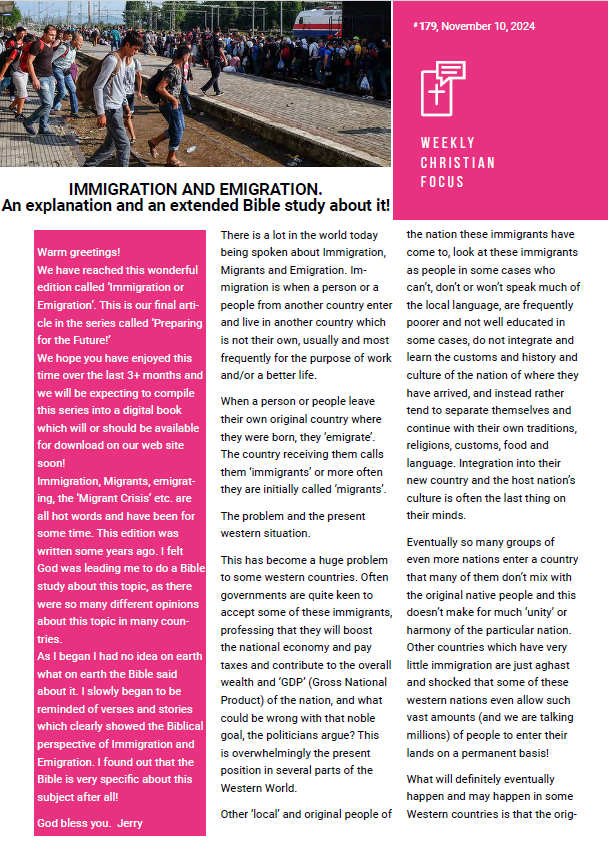
Summary of “Immigration or Emigration” Article:
- This article is the final installment of a series on future preparedness, focusing on immigration and emigration from a Biblical perspective.
- Immigration is when individuals move to a new country, while emigration refers to leaving one’s homeland. Both concepts are contentious topics today, particularly in Western countries.
- Many Western nations accept immigrants to boost the economy, but there are concerns about social integration, cultural preservation, and potential ethnic displacement.
- Some argue that policies promoting mass immigration could undermine traditional cultural identity, likening it to Esau’s Biblical story of selling his birthright.
- Biblical figures such as Abraham, Joseph, Moses, Daniel, and Jesus’ family are examples of emigrants, often moving by divine will rather than for material gain.
- The article suggests that the Bible views emigration and immigration as acts permitted by God for specific purposes rather than solely personal motivations.
- Summary: “Sometimes It Is Wiser to Stay Where You Are”
- Isaac’s Obedience in Famine: God instructed Isaac not to go to Egypt during a famine, despite it being wealthier and more stable. Isaac stayed in Canaan as God directed, ultimately prospering there (Genesis 26:2-6).
- Jeremiah’s Choice to Stay: After Israel’s defeat by Babylon, Jeremiah chose to remain in Israel instead of moving to Babylon, even though it offered better conditions (Jeremiah 40:1-6).
- Advice to the Remnant in Judah: After Jerusalem’s destruction, Jeremiah advised the remaining Jews not to emigrate to Egypt despite its wealth. They initially agreed to follow his guidance but ultimately ignored it, preferring their own plans (Jeremiah 42-43).
- Consequences of Emigrating for Material Gain: The story of Elimelech’s family highlights the potential hardships of leaving one’s homeland for financial reasons, suggesting the importance of seeking God’s will before making such decisions (Ruth 1).
- Biblical Stance on Emigration: The article argues that, according to the Bible, leaving one’s homeland should be guided by God rather than economic motivations, as moving without God’s blessing often leads to difficulties.
- Exceptions for Missionaries: Christian missionaries are seen as exempt from this restriction, as their movement aligns with God’s call to spread the Gospel (Mark 16:15).
- Long-term View on Immigration: In God’s kingdom, nationality will cease to matter, and all will be united under His rule. True belonging is to God’s kingdom, not earthly nations (Acts 17:26-27, Revelation 11:15).
- Future Hope: In the future, as part of God’s kingdom, believers will no longer face issues of discrimination or resource conflicts associated with migration. The text encourages trust in God over seeking financial security.