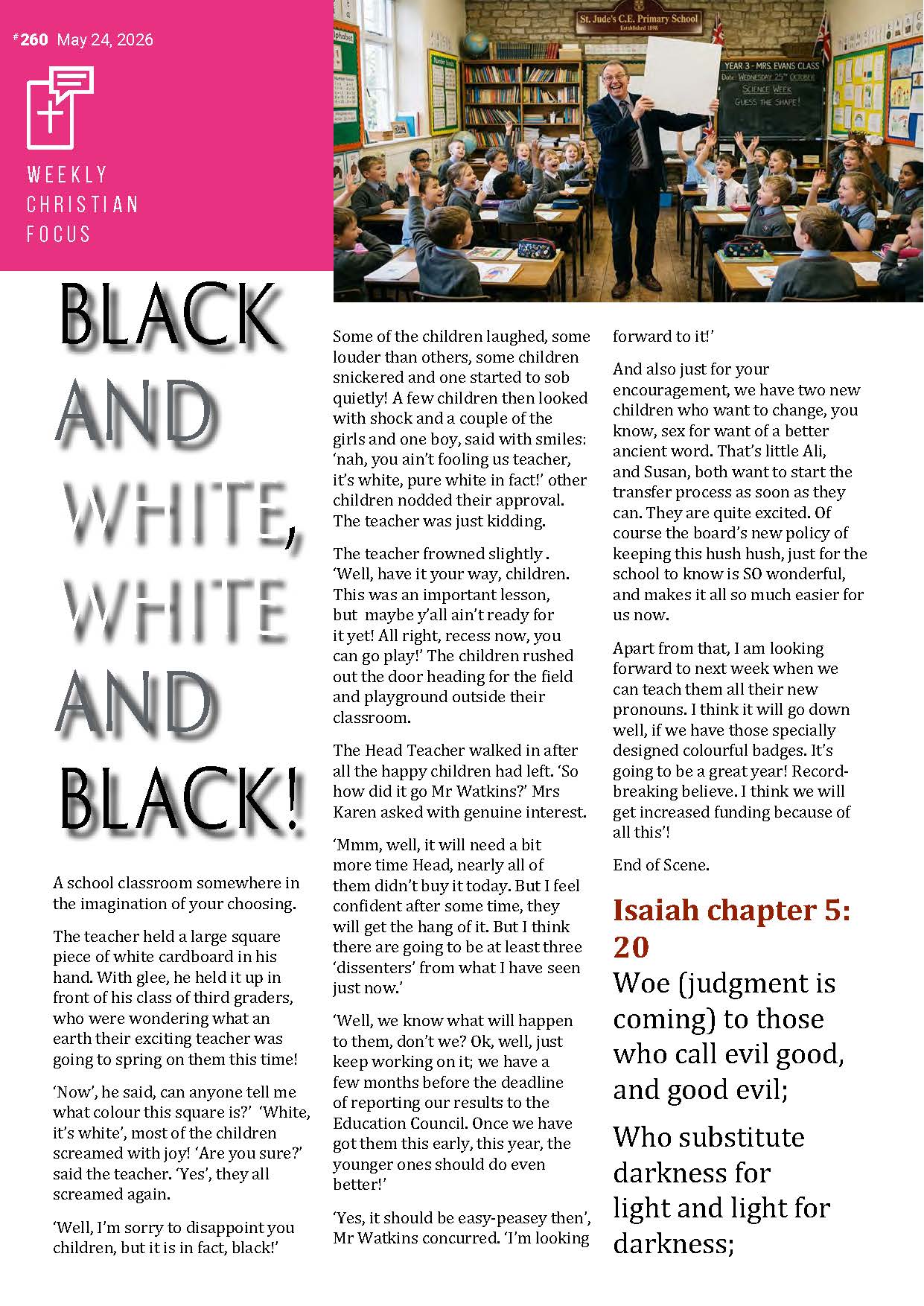
The article uses a fictional classroom scene to expose how truth can be deliberately distorted over time, and falsehood is passed for truth. A teacher attempts to convince young children that a clearly white object is actually black. While most resist at first, the implication is that repetition, authority, and pressure will eventually shape their thinking. The conversation between staff reveals a broader agenda to influence beliefs early, suppress dissent, and normalize ideas that contradict observable reality. The piece then connects this scenario to modern cultural debates, warning that society is increasingly redefining truth, morality, and identity. It closes with a strong reference to Book of Isaiah 5:20–23, emphasizing that calling good evil and evil good invites judgment.