
Greetings and we pray you enjoy this simple yet profound edition and also take time to look at the amazing links provided.
Today we continue with Part III of Great Christian men and women of God, who were ‘produced’ by the Lord in the United Kingdom. These five wonderful biographical excerpts are taken from these two Books:
- “British Christians and the Coming Civil War” and also
- “40 great men and women of God from the United Kingdom in the last 400 years!” (Links below)
I am sure as you prayerfully read these biographies, whether they are short or long, that the Lord will speak to you mightily and change your life and any false mind-sets you may possibly be unaware of, so that your own life will be happier and more in line with God’s plan for you. Amen.
These biographies are:
(I) Eric Liddle (Scotland)
(ii) George Jeffreys (Wales)
(iii) Mercy LeGrice (England)
iv) David Thrower (England)
(v) Amy Carmichael (Northern Ireland)
Please enjoy and send feedback to us at wcf@nym.hush.com or at the email which has sent you this file.
Let’s go!
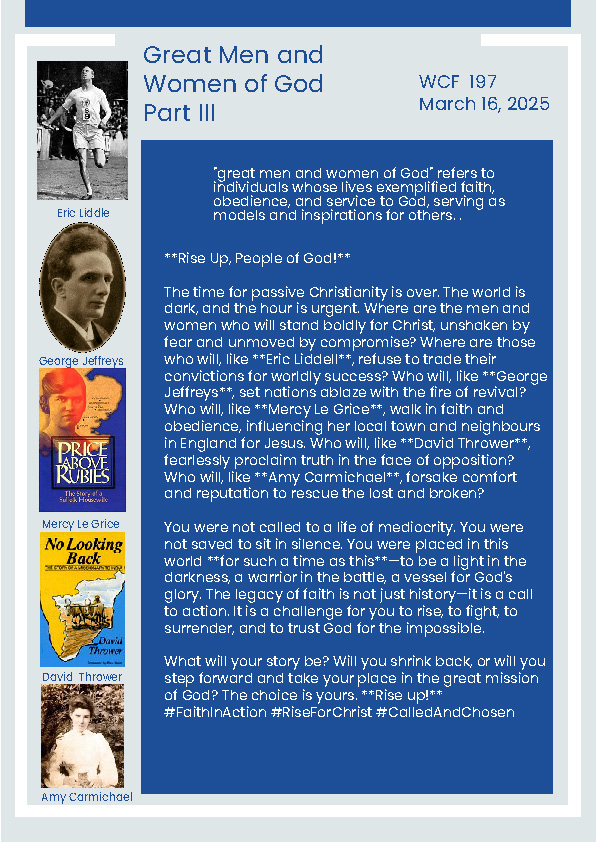
Eric Liddle
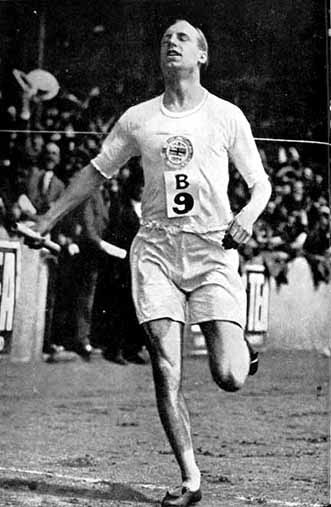
1902-1945
https://en.wikipedia.org/wiki/Eric_Liddell
Eric Henry Liddell (16 January 1902 – 21 February 1945) was a Scottish athlete, rugby union international player, and missionary, who chose between his religious beliefs and competing in an Olympic race.
Accomplishments
At the 1924 Summer Olympics in Paris, Liddell refused to run in the heats for his favoured 100 metres because they were on a Sunday. He instead competed in the 400 metres, which he won. He returned to China in 1925 to serve as a missionary teacher. Aside from two furloughs in Scotland, he remained in China until his death in a Japanese civilian internment camp in 1945.
Liddell’s Olympic training and racing, and the religious convictions that influenced him, are depicted in the Oscar-winning 1981 film Chariots of Fire, in which he is portrayed by fellow Scot Ian Charleson.
Comments
I love Eric Liddle, mostly because he loved Jesus more than the world and fame. His life has been immortalised by the movie Chariots of Fire, a film that millions of people love to see over and over again.
(2089) chariots of fire movie – YouTube
In spite of great success in the 1924 Olympics and being a great hero especially in Scotland Eric Liddle stayed true to God’s special calling to him. He died during the Japanese occupation of Mainland China in a Japanese concentration camp where he ministered to the predominantly Chinese children who were there. I find the following information especially poignant. (Taken from Wikipedia)
In his last letter to his wife, written on the day he died, Liddell wrote of suffering a nervous breakdown due to overwork. He actually had an inoperable brain tumour; overwork and malnourishment may have hastened his death. Liddell died on 21 February 1945, five months before the end of the war. Langdon Gilkey later wrote, “The entire camp, especially its youth, was stunned for days, so great was the vacuum that Eric’s death had left.” According to a fellow missionary, Liddell’s last words were, “its complete surrender”, in reference to how he had given his life to God.
On 5 June 1945 the Eric Liddell Memorial Committee was set up in Glasgow, seeking donations for a Fund to provide for the education and maintenance of Eric Liddell’s three daughters; to fund an Eric Liddell Missionary Scholarship at Edinburgh University and an Eric Liddell Challenge Trophy for Amateur Athletics; and to erect a Memorial in North China to commemorate Eric Liddell’s work there. Only the first and third objectives were achieved. To raise funds and to widen its appeal, the Committee published a pamphlet by D.P. Thomson: Eric Liddell, The Making of an Athlete and the Training of a Missionary. The Fund was eventually wound up in 1954, having raised £3,687 15s – over £88,000 in relative purchasing power.
D.P. Thomson also spoke at well-attended Memorial Services held in both Edinburgh and Glasgow in 1945.
In 2008, just before the Beijing Olympics, Chinese authorities claimed that Liddell had refused an opportunity to leave the camp, and instead gave his place to a pregnant woman. Apparently, the Japanese and British, with Churchill’s approval, had agreed upon a prisoner exchange. However none of his friends or those who had lived with him in the camp gave the story any credence.
56 years after the 1924 Paris Olympics, Scotsman Allan Wells won the 100 metre sprint at the 1980 Moscow Olympics. When asked after the victory if he had run the race for Harold Abrahams, the last 100 metre Olympic winner from Britain (in 1924) who had died two years previously, Wells replied, “No… I would prefer to dedicate this to Eric Liddell”.
Eric Liddell was the most popular athlete Scotland has ever produced, according to the public voting for the first inductees for the Scottish Sports Hall of Fame in 2002.
GEORGE JEFFREYS

1889-1962
George Jeffreys
It is no wonder that George Jeffreys became the founder and leader of the Britain’s Elim Pentecostal Alliance. He was arguably the most influential and most gifted preacher that the British Pentecostal Movement has ever produced. Donald Gee’s record of him is revealing: ‘He had a voice like music, with sufficient Welsh intonation to add an inimitable charm. His platform personality at times was magnetic. His face was appealing. Although lacking academic training he possessed a natural refinement that made him acceptable in all circles. He presented his message with a logical appeal and a note of authority that was compelling. With all that he was baptized in the Holy Spirit.’
He was converted in the Welsh Revival on Nov. 20th 1904, with his brother Stephen, under the evangelistic ministry of Glassnant Jones. It was the provocation of Stephen’s son, Edward, who first received the Spirit and spoke in tongues that caused him to seek God for a deeper experience. Soon afterwards he received a personal healing from extreme physical frailty, a speech impediment and a developing facial paralysis. He was also baptised in the Holy Spirit and was soon preaching the Gospel publicly.
At Cecil Polhill’s instigation he resigned from his job at the Co-operative Stores in Maesteg, and began a period of training at the Pentecostal missionary college in Preston under Thomas Myerscough’s leadership and was set apart for the ministry by the Independent Apostolic Church known as Emmanuel Christ Church, Maesteg, on the 13th Nov. 1912.
He helped his brother in a mission in January 1913 and began to conduct small campaigns in Wales with increasing success. Attending the Sunderland convention in 1913 he was given opportunity to preach for Alexander Boddy and an Irish visitor immediately invited him to Ireland, offering to pay the fare. Unfortunately, when the owners of the hall in Monaghan that was secured for the series of meetings, learned that he was a Pentecostal, they cancelled the booking! During a further invitation in 1915 to minister in Monaghan, Northern Ireland, George met a group of zealous young men and they joined together forming the Elim Evangelistic Band, registering it as the Elim Pentecostal Alliance. The members were Margaret Streight, R. E. (Ernest) Darragh, William Henderson, and Frederick Farlow.
Initially they worked exclusively in Ireland, establishing his first church in Belfast in 1916. After this he accepted many invitations in England planting churches there from 1921. With Stephen he conducted highly successful crusades in London and Hull before entering London in 1922. In this year the headquarters of Elim were moved to Clapham in S.W. London. “Elim Woodlands” was purchased and it also housed the Elim Bible College, with other local properties added for administration of the growing movement.
George spent the next ten years in sustained evangelistic activity with remarkable success. During this time his ministry enjoyed a fresh anointing causing a meteoric rise to fame across the land. His evangelistic and divine healing campaigns soon filled the largest public halls in the country. There were thousands of converts, scores of healings and dozens of churches planted. In Birmingham 10,000 converts were recorded. British Pentecostalism enjoyed a quantum leap forwards during this time.
In mainland Europe he was also a great success, seeing an astonishing 14,000 converts in Switzerland in the years 1934-36. He visited Sweden several times and was the main preacher at the European Pentecostal Conference in Stockholm in June 1939.
He set up an Elim ministerial conference in 1933 but throughout the late 1930’s George was struggling with various methods of church government, making one change after another, until he found himself at variance with the governing conference in 1939. He finally resigned and left the Elim movement he founded in Nov.1940 and began the Bible-Pattern Church Fellowship based in Nottingham.
George’s health began to fail, and his public ministry began to decline in effect, never achieving the success of the former years. He became increasingly isolated and eventually died in January 1962 at the age of 72.
His funeral drew a large congregation to the Kensington Temple, and it was a disappointment to his many friends in all sections of the Movement that the ceremony was kept exclusively within his own circle. In spite of the clouds that dimmed the evening glory of his years, George Jeffreys remains a stirring memory as the greatest British evangelist since George Whitefield and John Wesley. For a time his brilliant gifts helped the whole Pentecostal testimony in the British Isles, and we salute him as one of our great pioneers and a notable gift of Christ to His Church.
Bibliography: Donald Gee, ‘These Men I Knew’ 1965; Desmond Cartwright art. ‘International Dictionary of Pentecostal and Charismatic Movements’ 2002.
Courtesy Tony Cauchi
http://www.smithwigglesworth.com/pensketches/jeffreysg.htm
We should also not forget that the spiritual anointing from God on George Jeffreys was probably passed on personally to the young, but destined to be great German Evangelist, Reinhard Bonnke in Clapham, London. Please see the interesting video on this or read about it in Bonnke’s awesome Book ‘Living a Life of Fire.’
https://www.youtube.com/watch?v=J-p4N_5I4YY
This last point above, is a very valuable point. It seems like at times, God allows Great men of God to ‘pass on their mantle’ to the next generation, just like Elijah did to Elisha! Please consider this. It is probable therefore that Reinhard Bonnke may not have been so successful had he not met George Jeffreys. The Lord also encouraged George through this, and Please watch the video or listen to it.
Mercy LeGrice
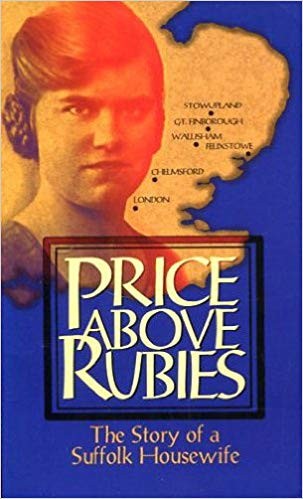
The ordinary housewife from rural Suffolk, Mercy Le Grice epitomises to me the character of true Christian women in the UK in recent centuries.
What’s so special about the almost unheard-of Mercy Le Grice? Absolutely nothing! That’s exactly why she and all Christian women like her are very valuable in God’s eyes. If taking care of your husband and family and being a faithful diligent witness to your local neighbour and community for Jesus Christ is ‘all’ you can do, then that’s absolutely fine with the Lord. You can read her interesting book, written in admiration by her daughter Daphne under the title: ‘Price Above Rubies’ ISBN 9757509787
If your legacy is just to be faithful in the corner where God planted you, only God Himself knows the effect and power of your simple Christian example of love and kindness on a daily basis. God remembers. This book and her life is a triumphant reminder of being faithful in that which is least and consequently affecting hundreds with the Gospel.
http://www.kitapyurdu.com/kitap/price-above-rubies/42974.html
This little book was first published in 1997, but since then the author has produced an updated edition (2019). This “Story of a Suffolk Housewife” concerns a lady named Mercy Le Grice. Although described as “one insignificant housewife,” this little book, written by her daughter, Daphne Swanson, proves that she was someone quite extraordinary. It is cheering to read of sacrificial and true Christian service lived out in the life of this believer in such a remarkable way. This biography shows what can be done by someone who lives for Christ in their daily calling. How many would readily give up their time, ease and home comforts for the sake of others, and even to house the homeless? An amazing life, and an inspiration and a challenge to every believer in these self-indulgent days.
David Thrower
1900-1985
David Thrower 1900-1985 epitomises to me most of the fantastic qualities of a servant of God. Here was a man called and sent by God to the peoples of Tamilnadu in South India. He and his wife, then spent around 60 years amidst very short breaks or furloughs there with his family in service for Jesus Christ in difficult conditions. Not considering his life dear unto him, he also oversaw the translation and printing of the first bibles, tracts and new testaments as well as other devotional material into the Tamil (and other) languages. Fluent in Tamil himself, he fathered several children and spent an enormously fruitful time there with his wife ‘Marty’. His life is gloriously understood in the book appropriately titled: ‘No looking back’ The story of a missionary to India.’ I highly recommend a reading!
His attitude is exactly what it should be from a great man of God, as Jesus said ‘He that puts his hand to the plow and looks back is not worthy of the Kingdom of God.’ Luke 9:62.
There really is a lot to be learned if we can just grasp or ask God to help us grasp this vision of the mission field and treat it as a marriage between us and that field of souls. There is then no discharge unless the Lord guides for a while. It is one thing just to stick. And that’s often why the devil fights so many to move and change when it is not God’s time for them yet.
Amy Carmichael
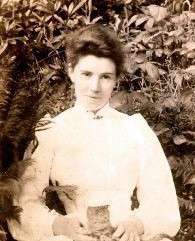
1867–1951
Who was she?
A small-village girl from a devout Presbyterian family in County Down, Northern Ireland (her father founded an evangelical church in Belfast). She was called first to work among the mill girls of Manchester and then overseas, finding her life-long vocation in India.
Key achievement
In those days, Hindu priests kept “temple children” — mostly young girls who were forced into prostitution to earn money for them. Carmichael tried to rescue them by setting up a sanatorium in Tamil Nadu, thirty miles from the southern tip of India.
Bold behaviour
She would dress in Indian clothes, dye her skin with dark coffee, and travel long distances on hot, dusty roads to save just one child from suffering.
How she died
In India at the age of 83. She asked that no stone be put over her grave. Instead, the children she had cared for put a bird bath over it with the single inscription Amma, meaning “mother” in Tamil.
Cryptic remark
While serving in India, Carmichael received a letter from a young lady who was considering life as a missionary. She asked, “What is missionary life like?” Carmichael wrote back saying simply,
“Missionary life is simply a chance to die.”
Below we wish to thank Wikipedia for this summary, although still not fully edited on site.
Amy Wilson Carmichael (16 December 1867 – 18 January 1951) was a Protestant Christian missionary in India, who opened an orphanage and founded a mission in Dohnavur. She served in India for 55 years without furlough and wrote many books about the missionary work there.
Early life
Amy Wilson Carmichael was born in the small village of Millisle, County Down, Ireland in 1867; her parents were David Carmichael, a miller and his wife Catherine. Her parents were devout Presbyterians and she was the oldest of seven siblings.
One possibly apocryphal story claims that as a child, Amy wished that she had blue eyes rather than brown, and often prayed that Jesus would change her eye color and was disappointed when it never happened. She loved to pinch her brother’s cheeks to make the prettiest color blue in his eyes. But she always repented afterwards for hurting her brother. As an adult, however, she realized that her brown eye color probably helped her gain acceptance in India.
Amy attended Harrogate Ladies College for four years in her youth. It was there she converted to Christianity.
Amy’s father moved the family to Belfast when she was 16, but he died two years later. In Belfast, the Carmichaels founded the Welcome Evangelical Church. In the mid-1880s, Carmichael started a Sunday-morning class for the ‘Shawlies’ (mill girls who wore shawls instead of hats) in the church hall of Rosemary Street Presbyterian. This mission grew and grew until they needed a hall to seat 500 people. At this time Amy saw an advertisement in The Christian, for an iron hall that could be erected for £500 and would seat 500 people. Two donations, £500 from Miss Kate Mitchell and one plot of land from a mill owner, led to the erection of the first “Welcome Hall” on the corner of Cambrai Street and Heather Street in 1887.
Amy continued at the Welcome until she received a call to work among the mill girls of Manchester in 1889, from which she moved on to missionary work, although in many ways she seemed an unlikely candidate for missionary work, suffering as she did from neuralgia, a disease of the nerves that made her whole body weak and achy and often put her in bed for weeks on end. But at the Keswick Convention of 1887, she heard Hudson Taylor, founder of the China Inland Mission speak about missionary life; soon afterwards, she became convinced of her calling to missionary work. She applied to the China Inland Mission and lived in London at the training house for women, where she met author and missionary to China, Mary Geraldine Guinness, who encouraged her to pursue missionary work. She was ready to sail for Asia at one point, when it was determined that her health made her unfit for the work. She postponed her missionary career with the CIM and decided later to join the Church Missionary Society.
Work in India
Initially Carmichael traveled to Japan for fifteen months, but fell ill and returned home. After a brief period of service in Ceylon (Sri Lanka), she went to Bangalore, India for her health and found her lifelong vocation. She was commissioned by the Church of England Zenana Mission. Carmichael’s most notable work was with girls and young women, some of whom were saved from customs that amounted to forced prostitution. Hindu temple children were primarily young girls dedicated to the gods, then usually forced into prostitution to earn money for the priests (i.e., Devadasi).
Carmichael founded the Dohnavur Fellowship in 1901 to continue her work, as she later wrote in The Gold Cord (1932). A popular early work was Things as They Are: Mission Work in Southern India (1903). Dohnavur is situated in Tamil Nadu, thirty miles from India’s southern tip. The name derives from Count Dohna, who initially funded German missionaries at the site in the early 19th century, on which Rev. Thomas Walker then established a school. Carmichael’s fellowship transformed Dohnavur into a sanctuary for over one thousand children who would otherwise have faced a bleak future. Carmichael often said that her Ministry of rescuing temple children started with a girl named Preena. Having become a temple servant against her wishes, Preena managed to escape. Amy Carmichael provided her shelter and withstood the threats of those who insisted that the girl be returned either to the temple directly to continue her sexual assignments, or to her family for more indirect return to the temple. The number of such incidents soon grew, thus beginning Amy Carmichael’s new Ministry. When the children were asked what drew them to Amy, they most often replied “It was love. Amma (Amy) loved us.”
Respecting Indian culture, members of the organization wore Indian dress and gave the rescued children Indian names. Carmichael herself dressed in Indian clothes, dyed her skin with dark coffee, and often traveled long distances on India’s hot, dusty roads to save just one child from suffering.
While serving in India, Amy received a letter from a young lady who was considering life as a missionary. She asked Amy, “What is missionary life like?” Amy wrote back saying simply, “Missionary life is simply a chance to die.” Nonetheless, in 1912 Queen Mary recognized the missionary’s work, and helped fund a hospital at Dohnavur. By 1913, the Dohnavur Fellowship was serving 130 girls. In 1918, Dohnavur added a home for young boys, many born to the former temple prostitutes. Meanwhile, in 1916 Carmichael formed a Protestant religious order called Sisters of the Common Life.
Final Days and Legacy
In 1931, a fall severely injured Carmichael, was hurt and she remained bedridden for much of her final two decades. However, it did not stop her from continuing her inspirational writing, for she published 16 additional books (including His Thoughts Said . . . His Father Said (1951), If (1953), Edges of His Ways (1955) and God’s Missionary (1957), as well as revised others she had previously published. Biographers differ on the number of her published works, which may have reached 35 or as many as six dozen, although only a few remain in print today.
Carmichael died in India in 1951 at the age of 83. She asked that no stone be put over her grave at Dohnavur. Instead, the children she had cared for put a bird bath over it with the single inscription “Amma”, which means mother in the Tamil language.
Her example as a missionary inspired others (including Jim Elliot and his wife Elisabeth Elliot) to pursue a similar vocation. Many webpages include quotes from Carmichael’s works, such as:
“It is a safe thing to trust Him to fulfill the desire that He creates.”
India outlawed temple prostitution in 1948. However, the Dohnavur Fellowship continues, now supporting approximately 500 people on 400 acres with 16 nurseries and hospital. Rescued women can leave, or join the community, or return for important occasions, including the Christmas season. The foundation is now run by Indians under the jurisdiction of the C.S.I Tirunelveli Diocese, founded in 1896. Changed policies acknowledging Indian law require that all children born in or brought to Dohnavur are sent out for education in the 6th grade. Furthermore, since 1982, baby boys are adopted out rather than remain in the community.
Works (Literary – Partial List)
- From Sunrise Land: Letters from Japan, Marshall 1895
- Things as they are; mission work in southern India, London: Morgan and Scott (1905)
- Lotus Buds, London: Morgan and Scott (1912)
- Ragland, pioneer, Madras: S.P.C.K. Depository (1922) (biography of Thomas Gajetan Ragland)
- Walker of Tinnevelly, London: Morgan & Scott (1916) (biography of Thomas Walker)
- Candles in the Dark, Christian Literature Crusade (June 1982)
- Rose from Brier, Christian Literature Crusade (June 1972)
- Mimosa: A True Story, CLC Publications (September 2005)
- If, Christian Literature Crusade (June 1999)
- Gold Cord, Christian Literature Crusade (June 1957)
- Edges of His Ways, Fort Washington: Christian Literature Crusade (1955)
- Mountain Breezes: The Collected Poems of Amy Carmichael, Christian Literature Crusade (August 1999)
- Whispers of His Power, CLC Publications (June 1993)
- Thou Givest They Gather, CLC Publications (June 1970)
- Ploughed Under : The Story of a Little Lover, Society for Promoting Christian Knowledge (SPCK) (1934)
- Kohila: The Shaping of an Indian Nurse, CLC Publications (July 2002)
- In This Generation: Looking to the Past to Reach the Present, Todd Ahrend (2010)
Bibliographies
- Elliot, Elisabeth, A Chance to Die: the Life and Legacy of Amy Carmichael. Grand Rapids, MI: Fleming H. Revell Company, 1987. ISBN 978-0800730895
- Wellman, Sam, Amy Carmichael: A Life Abandoned to God. Barbour Publishing, 1998
- Bingham, Derick, The Wild-Bird Child: A Life of Amy Carmichael. Ambassador-Emerald International (2004) ISBN 1-84030-144-9, ISBN 978-1-84030-144-1
- Benge, Janet and Geoff Amy Carmichael: Rescuer of Precious Gems. YWAM Publishing 1998
Amy Carmichael only one minute video but my best choice for this wonderful woman of God!
CLOSING THOUGHTS AND PRAYERS:
DEAR LORD, I love you. You have raised up countless missionaries in every country on this planet, not just the UK, since your Resurrection over the last 2,000 years! How wonderful is the Holy Spirit Who has done such great things!
Precious Saviour, help me to do my part and either be a witness, a PASTOR, or a missionary or a financial and prayer partner for them.
HELP ME also to do my best to abide in the calling You have given me on this earth, so that when I meet You face to face in that soon-coming world, that I will not rise in that next world, in shame or reproach, but rather in joy and to hear your precious words;
‘Well done thou good and faithful servant, enter thou into the Joy of thy Lord’.
In Jesus’ Name, I pray, Amen!!
Daniel 12:3
FINALLY: important follow up info!
“British Christians and the Coming Civil War” is a book written by Jerry Finch in 2017.
THIS BOOK ALSO INCLUDES THE 40 GREAT MEN AND WOMEN OF GOD OVER THE LAST 400 YEARS IN THE UNITED KINGDOM (APPROX; 62% OF THE BOOK)
BUT ALSO; this book has several prophetic predictions and specific advice for true Christian believers in the Future. Jerry has also founded the British Underground Church (BUC) which becomes more relevant day by day in the UK world of 2025.
For much more information and introduction files about the BUC please email
- This book is also available in paperback for global distribution in single copies or bulk orders. Please call for details or email. Approximately 250 pages.
or call WhatsApp +44 7442 520 314 in British summer time zone only please between 11 am to 6 pm. Or text etc.
Until next week, Jerry for the WCF Team Global Team
Amazon.co.uk : “40 great men and women of God from the United Kingdom in the last 400 years! (Amazon Kindle version only)