
Greetings and we pray you enjoy this simple yet profound edition and also take time to look at the links.
Today we continue after a long time with Part II of Great Christian people produced for the Lord in the United Kingdom. These three wonderful excerpts are taken from the Books “British Christians and the Coming Civil War” and also “40 great men and women of God from the United Kingdom in the last 400 years!”
Smith Wigglesworth and
Rees Howells and
Mary Slessor
Please read these and be inspired!

SMITH WIGGLESWORTH 1859-1947
‘The Apostle of Faith’
Perhaps we are not allowed favourites, perhaps God has or has not favourites, but Smith Wigglesworth ranks high up there for me, if not number one!
If you wish to be a pastor, servant of God, Smith Wigglesworth is a man whose fruit is abundant and lasting over decades. Often misunderstood, and definitely unappreciated by a vast swathe of British Christians during his life, I highly recommend that everyone should read his ‘works’. ‘if you only had one other book after the Bible to read, you should read the teachings of Smith Wigglesworth,’ said one American evangelist.
Smith Wigglesworth was born in 1859 to a very poor family in Yorkshire, England. His father did manual labour, for very little pay. Smith himself went to work at the age of six to help with the family income. At six he was pulling turnips and at seven he was working in a woollen mill twelve hours a day. His parents did not know God, but Smith hungered in his heart to know Him. Even as a youngster he would pray in the fields. His grandmother was the critical Christian in his life. She was a Wesleyan Methodist and would take Smith to meetings with her. At one of these meetings there was a song being sung about Jesus as the lamb and Smith came into the realization of God’s love for him and his decision to believe Christ for his salvation was decided that day. He was immediately filled with the desire to evangelize and led his own mother to Christ.
Smith had various church experiences as he was growing up. He first went to an Episcopal church and then at thirteen a Wesleyan Methodist church. When he was sixteen he became involved in the Salvation Army. He felt deeply called to fast and pray for lost souls. He saw many people come to Christ. At seventeen a mentor shared with him about water baptism and he decided to be baptized. The Salvation Army was experiencing a tremendous level of the power of God in those days. He describes meetings where “many would be prostrated under the power of the Spirit, sometimes for as long as twenty-four hours at a time.” They would pray and fast and cry out for the salvation of fifty or a hundred people for the week and they would see what they had prayed for.
At eighteen, Smith left the factory and became a plumber. He moved to Liverpool when he was twenty and continued to work during the day and minister during his free time. He felt called to minister to young people and brought them to meetings. These were destitute and ragged children, whom he would often feed and care for. Hundreds were saved. Smith was often asked to speak in Salvation meetings and he would break down and weep under the power of God. Many would come to repentance in those meetings through this untrained man. At twenty-three he returned back Bradford and continued his work with the Salvation Army.
In Bradford, Smith met Mary Jane Featherstone, known as Polly, the daughter of a temperance lecturer. She left home and went to Bradford to take a servant’s job. One night she was drawn to a Salvation Army meeting. She listened to the woman evangelist, Gipsy Tillie Smith, and gave her heart to Christ. Smith was in that meeting and saw her heart for God. Polly became an enthusiastic Salvationist and was granted a commission by General Booth. They developed a friendship, but Polly went to Scotland to help with a new Salvationist work. She eventually moved back to Bradford and married Smith, who was very much in love with her.
The couple worked together to evangelize the lost. They opened a small church in a poor part of town. Polly would preach, and Smith would make the altar calls. For a season, however, Smith became so busy with his plumbing work that his evangelistic fervour began to wane. Polly continued on, bringing Smith to conviction. One day while Smith was working in the town of Leeds he heard of a divine healing meeting. He shared with Polly about it. She needed healing and so they went to a meeting, and Polly was healed.
Smith struggled with the reality of healing, while being ill himself. He decided to give up the medicine that he was taking and trust God. He was healed. They had five children, a girl and four boys. One morning two of the boys were sick. The power of God came, and they prayed for the boys and they were instantly healed. Smith struggled with the idea that God would use him to heal the sick in general. He would gather up a group of people and drive them to get prayer in Leeds. The leaders of the meeting were going to a convention and left Smith in charge. He was horrified. How could he lead a meeting about divine healing? He tried to pass it off to someone else but could not. Finally, he led the meeting and several people were healed. That was it. From then on Smith began to pray for people for healing.
Smith had another leap to make. He had heard about the Pentecostals who were being baptized in the Holy Spirit. He went to meetings and was so hungry for God he created a disturbance and church members asked him to stop. He went to prayer and prayed for four days. Finally, he was getting ready to head home and the vicar’s wife prayed for him and he fell under the power of God and spoke in tongues. Everything changed after that. He would walk by people and they would come under the conviction of the Holy Spirit and be saved. He began to see miracles and healings and the glory of God would fall when he prayed and preached.
Smith had to respond to the many calls that came in and gave up his business for the ministry. Polly unexpectedly died in 1913, and this was a real blow to Smith. He prayed for her and commanded that death release her. She did arise but said “Smith – the Lord wants me.” His heartbroken response was “If the Lord wants you, I will not hold you”. She had been his light and joy for all the years of their marriage, and he grieved deeply over the loss. After his wife was buried he went to her grave, feeling like he wanted to die. When God told him to get up and go Smith told him only if you “give to me a double portion of the Spirit – my wife’s and my own – I would go and preach the Gospel. God was gracious to me and answered my request.” His daughter Alice and son-in-law James Salter began to travel with him to handle his affairs.
Smith would pray, and the blind would see, and the deaf were healed, people came out of wheelchairs, and cancers were destroyed. One remarkable story is when He prayed for a woman in a hospital. While he and a friend were praying she died. He took her out of the bed stood her against the wall and said, “in the name of Jesus I rebuke this death”. Her whole body began to tremble. The he said, “in the name of Jesus walk”, and she walked. Everywhere he would go he would teach and then show the power of God. He began to receive requests from all over the world. He taught in Europe, Asia, New Zealand and many other areas. When the crowds became very large he began a “wholesale healing”. He would have everyone who needed healing lay hands on themselves and then he would pray. Hundreds would be healed at one time.
During the course of Smith’s ministry, it was confirmed that 14 people were raised from the dead. Thousands were saved and healed, and he impacted whole continents for Christ. Smith died on March 12, 1947 at the funeral of his dear friend Wilf Richardson. His ministry was based on four principles “First, read the Word of God. Second, consume the Word of God until it consumes you. Third believe the Word of God. Fourth, act on the Word.”
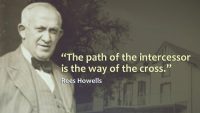
REES HOWELLS 1879-1950
I recently came across the excellent book about Rees Howells, whom I had never previously heard of, called The Intercession of Rees Howells by Doris M. Ruscoe.
God gave Christendom Rees Howells to explore something we have not even now really tapped fully into and that is– Intercession. ‘Intercession’ today has a slightly different meaning to what it really meant to both God and Rees Howells.
It would take quite some time to explain this, so I encourage you to read that book and also the one by Norman Grubb called ‘Rees Howells: Intercessor’.
In simplistic terms, God called Rees Howells to live in a poor village in South Wales for some years. In this village God through the Holy Spirit disciplined him, in what we today would regard as very extreme and almost insane ways of operating. These ways of the Spirit of God had to do briefly with having him befriend the poorest and neediest of the village such as tramps, of whom there were many. The Lord showed him to claim their souls in prayer while at the same time emptying his finances daily to supply their needs, until he himself was penniless. From this penniless condition God abundantly supplied for him financially to cause him to keep providing for them. Through this ‘sacrifice’ or what Howells simply calls, obedience, he felt he was able to claim anything in prayer from God regarding these people. This is what he regards as ‘Intercession’, a far cry from what we think if it today! He relates that every one of the people the Spirit led him to befriend were saved and some became strong Christians.
But this was only the beginning of his training by the Lord, eventually he made even greater sacrifices demanded by the Spirit, he ended up going to Africa with his wife, where he knew he could claim at least 10,000 souls as the result of one of his most sacrificial obedience to the Spirit.
The final part of his life, which was a long period of over two decades saw him establish the renowned Swansea Bible College. The testimonies and stories from that period which also covered the pre and post Second World War eras are really the stuff of Christian legend to those who knew the events or visited themselves.
Having read this beautiful book twice in the last month, I believe all Christians should be required to read and study it as this principle is the only the gateway or portal to a deeper life in Christ. In fact, it’s my contention, which I make later in this volume, that this is not extreme at all, but that we all could do exploits of the type Rees Howells manifested. He went so far simply through obedience. This should be the ‘average’ for us, and not the extreme of just a few ‘chosen’ people. We are all called to obedience and how much the Spirit can use any of us for God depends almost entirely on our Obedience to the Word of God and the leading of the Holy Spirit.
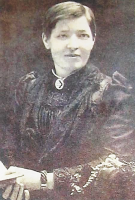
MARY SLESSOR 1848-1915
Mary Mitchell Slessor (2 December 1848 – 13 January 1915) was a Scottish missionary to Nigeria. Her work and strong personality allowed her to be trusted and accepted by the locals while spreading Christianity, protecting native children and promoting women’s rights. She is credited with having stopped the killing of twins among the Efik, a particular ethnic group in Nigeria.
Key Facts courtesy https://missions.awana.org
To learn more about Mary Slessor, go to:
http://maryslessor.org/mary-slessor/
The following missionary biography courtesy of https://www.wholesomewords.org
Mary Slessor, Among the Cannibals of Calabar
by Thomas John Bach
There are many missionaries who, in one form or another, have contributed a paragraph, a page, or a chapter to the history of missions who have not been, geographically speaking, pioneers. But because of spiritual conviction, Christian courage, and consecration to the cause of Christ, they have become pioneers in a specific missionary work which others had considered neither possible nor essential.
Before Mary Slessor was born, as early as 1846, the United Presbyterian Church had sent missionaries to Calabar, West Africa. Thirty years later, Mary Slessor, one of the most heroic women in the history of missions, came to Calabar. It is because of her distinguished work there of almost forty years, not just the place nor the time, that her missionary endeavor is classified as pioneering for Christ.
Dr. Robert H. Glover, missionary statesman, teacher, and author, in his book, The Progress of World-Wide Missions, describes the life and work of Mary Slessor in the following brief words: “Her life rivals in many particulars that of David Livingstone. She served in Africa under the United Free Church of Scotland from 1876 to 1915. From an unlettered factory girl in the homeland, she advanced into the foremost rank of missionary pathfinders. Her work was that of a pioneer among the most savage tribes of the Calabar hinterland. Practically singlehanded she tamed and transformed three pagan communities in succession. It is a question if the career of any other woman missionary has been marked by so many strange adventures, daring feats, signal providences, and wonderful achievements.”
Mary Slessor was born at Aberdeen, Scotland, December 2, 1848. Her father was a shoemaker, but his earnings were usually spent in the taverns. Small domestic possessions were pawned or sold to provide the necessary food and clothing. Mary was the second of seven children. She found her comfort, joy, and strength in God’s Word. Bible reading and missionary stories, especially from Africa, captured the interest of both mother and children. They attended Sunday school faithfully and were always present when a missionary was speaking in the church.
Leaving the Loom
At eleven years of age Mary began to work in the spinning and weaving mills, toiling from six to six. When, in the year 1873, the news came from Africa that “Livingstone is dead,” Mary was about twenty-five years old. She asked her mother if she might go to Africa as a missionary.
In 1875 she sent her application to the United Presbyterian Church of Scotland, offering herself as a missionary for Calabar. She was accepted on the condition that she take a few brief studies at a normal school in Edinburgh. On the fifth of August, 1876, she sailed for Calabar, Africa.
The first duty of Mary Slessor was to study and learn the trade language called Efik. From her very first contact with the natives her heart was deeply touched because of the cruel treatment they received from their chief. They were whipped, sold, and killed.
Although Mary was not highly trained academically, she had the capacity of an ardent student and a ready learner. She realized that the principal reason for her coming to Africa was to lead people to Christ and train them to continue the work after she was gone. The boys and girls had to be taught to read and write. The abused and mistreated people had to be defended. And Mary had to win the confidence of both the heathen chief and the foreign authority. She knew that she had to live a Christian life as well as preach the truth concerning God and redemption through Christ before the natives would accept her teaching and her Saviour.
Saving the Little Ones
Witchcraft and heathen customs among the people were most difficult to overcome. For instance, the birth of twins meant a triple death—unless Mary Slessor arrived in time to prevent the murder. The mother of the twins was considered to be possessed of an evil spirit and she, together with the twins, would be killed. Mary would plead for the mother and often take the twins to her own humble home. It was her joy to influence the old chief to declare unlawful the murder of twins.
Mary Slessor’s great desire in her missionary work was to go to “the regions beyond” to preach and live the gospel of Christ where messengers of the Cross had not been, and to render a service for Christ which up to that time had not been attempted. On her long trips through the jungles and in canoes on the rivers among the cannibals, she was often found barefoot, carrying in her arms twin babies whom she “had rescued from being murdered.
Because of her excellent judgment, her love for the people, and the confidence the High Commissioner of the government had in her opinion, she was asked to sit in their courts. In the district Ibibio she was requested to be in charge of the affairs of the courts, a position she held until November, 1909, when her health did not permit her to continue.
She supervised the construction of humble schoolhouses and churches. On her three brief furlough trips home she not only recuperated physically but was also able to represent effectively the need of the mission field, the claims of Christ, and her need of prayer. She would often repeat, “It is not Mary Slessor, but God and our united prayers that have brought the blessings to Calabar. Christ shall have all the honor and glory for the multitudes saved.”
Everybody’s Mother
Critically ill with a fever in the early part of January, 1915, she became unconscious. A doctor from the Slessor hospital came to minister to the physical needs of Mary Slessor, but the day for her departure was drawing near. In her dying hour, surrounded by the native Christian girls and women, she was praying in Efik, the language of the people she had served. In the early morning of January 13, 1915, she went to be with the Lord. The natives cried bitterly, “Our mother is dead. Everybody’s mother has left us.” The coffin was draped with the British flag and brought to Duke Town for burial.
Many Christians have been challenged to follow and serve Christ by Mary Slessor, who began her missionary work under such unfavorable circumstances, but finished it after bringing multitudes to Christ. God still specializes in doing the impossible through human instruments who will say: “Not my plans, not my glory, but God’s plan, and His glory.”
“God hath chosen the weak things of the world to confound the things which are mighty…things which are despised, hath God chosen” (I Cor. 1:27-28).
Mary Slessor wrote to a friend who had long prayed for her: “I have always said that I have no idea how or why God has carried me over so many funny and hard places, and made these hordes of people submit to me, or why the Government should have given me the privilege of a Magistrate among them, except in answer to prayer made at home for me. It is all beyond my comprehension. The only way I can explain it is on the ground that I have been prayed for more than most. Pray on, dear one—the power lies that way.”
On another occasion she wrote: “Prayer is the greatest power God has put into our hands for service—praying is harder than doing, at least I find it so, but the dynamic lies that way to advance the Kingdom.”
Concerned about the purposeless lives of some women in the homeland, she advised them, in words which may well be the secret of her own life of blessing: “Gird yourself for the battle outside somewhere and keep your heart young. Give up your whole being to create music somewhere, in the light places and in the dark places, and your life will make melody.”
“Don’t talk about the cold hand of death,” she said. “It is the hand of Christ.”
As for her rewards, she had but one question: “What would I do with starry crowns except to cast them at His feet?”
Copied for WholesomeWords.org from Pioneer Missionaries for Christ and His Church by Thomas John Bach. Wheaton, Ill.: Van Kampen Press, ©1955.
If God has called you to be a pastor or missionary or any type of worker for him, rejoice in that calling!
Until next week, God willing,
Jerry for the wcf team
coming in the next editions,
true pastors part ii
esther and the hateman part ii
faithful in the least!
Links
I Saw the Glory: My Relationship with Smith Wigglesworth ~ Dr. Lester Sumrall
Smith Wigglesworth | Divine Healing and Walking in Health Audio recordings of s.m’s sermons
Reinhard Bonnke Lessons from Samuel Rees Howells & Staff on Faith – God has Delivered Us! Reinhard Bonnke knew Rees Howells!
God’s College – Jehovah Jireh – God owns the Silver and the gold. Glynderwen.
His bible college in swansea wales, enjoy!
(2040) mary slessor movie – YouTube a host of videos and information
https://youtu.be/D8k6yia3fYo mary slessor — short documentary